
Healthcare Protective Clothing Guide: Types, Standards, and How Hospitals Choose Medical PPE
Healthcare protective clothing is a key component of infection prevention and workplace safety in modern medical environments. Hospitals, clinics, laboratories, and emergency response teams rely on protective garments to reduce exposure to biological hazards, bodily fluids, and contaminated surfaces.
From isolation gowns to medical coveralls, healthcare PPE helps create a physical barrier that protects both healthcare workers and patients. Choosing the right protective clothing is therefore an important decision for hospital procurement teams, distributors, and healthcare administrators.
This guide provides a detailed overview of healthcare protective clothing types, international safety standards, and practical procurement considerations for medical organizations.
What Is Healthcare Protective Clothing?
什么是医疗防护服?
Healthcare protective clothing refers to specialized garments designed to protect healthcare workers from exposure to infectious agents, bodily fluids, and hazardous substances.
These garments are widely used in:
-
Hospitals
-
Outpatient clinics
-
Diagnostic laboratories
-
Pharmaceutical production facilities
-
Emergency medical services
Common examples include:
-
Isolation gowns
-
Surgical gowns
-
Medical protective coveralls
-
Disposable lab coats
Protective clothing is considered an essential part of personal protective equipment (PPE) used in healthcare settings.
Why Protective Clothing Is Critical in Healthcare?
Medical professionals frequently work in environments where exposure to pathogens and contaminated fluids is possible. Without proper protection, these exposures can lead to infections, cross-contamination, and workplace safety risks.
医疗专业人员经常在可能暴露于病原体和受污染体液的环境中工作。如果没有适当的防护,这些暴露可能导致感染、交叉污染和工作场所安全风险。
Healthcare protective clothing helps facilities achieve several key objectives.
Infection Prevention
Protective garments reduce the risk of microorganisms transferring between patients, staff members, and clinical environments.
Worker Safety
Healthcare workers may encounter bloodborne pathogens, airborne particles, and chemical hazards during daily operations.
Protective clothing provides an additional layer of safety.
Regulatory Compliance
Many healthcare systems require institutions to follow strict infection control guidelines. Proper use of PPE helps hospitals comply with these regulations.
Operational Efficiency
Disposable protective garments simplify workflow by eliminating the need for laundering and sterilization.
Main Types of Healthcare Protective Clothing
Different healthcare tasks require different levels of protection. Understanding the most common categories of protective clothing can help procurement teams select appropriate products.
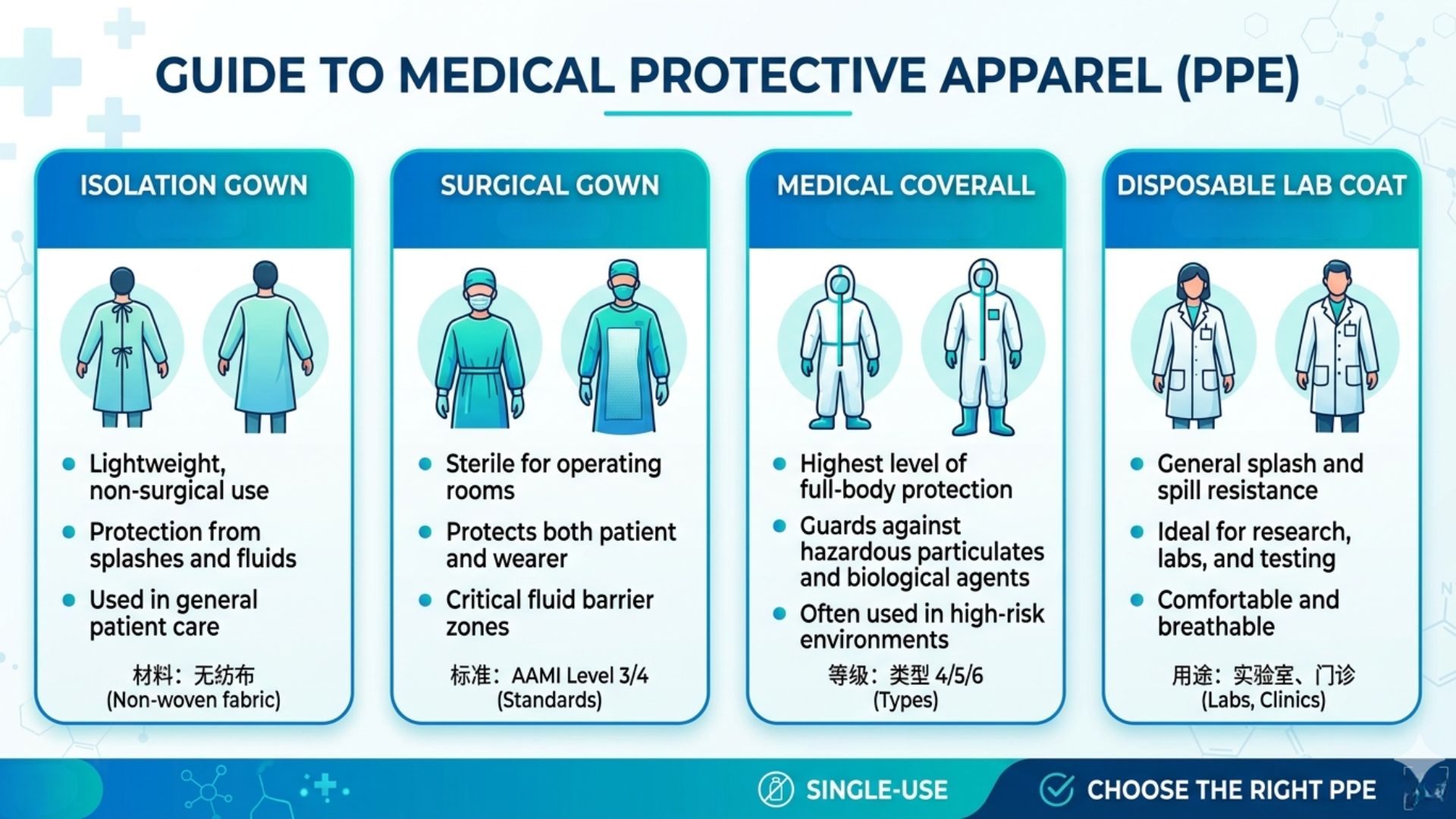
Isolation Gowns
Isolation gowns are among the most frequently used protective garments in healthcare settings.
They are designed to protect healthcare workers during routine patient care where contact with fluids or infectious materials may occur.
它们旨在保护医护人员在日常患者护理中可能接触液体或传染性物质时的安全。
Typical uses include:
-
Patient isolation wards
-
Routine examinations
-
Nursing care
-
Medical procedures involving low to moderate fluid exposure
Isolation gowns are typically manufactured using nonwoven materials such as polypropylene or SMS fabric, which provide a balance between protection and comfort.
Surgical Gowns
Surgical gowns are designed for high-risk medical procedures where exposure to blood and bodily fluids is more likely.
These garments are commonly used in:
-
Operating rooms
-
Surgical centers
-
Trauma care units
Key features include:
-
Sterile packaging
-
Reinforced protection zones
-
High fluid resistance
Surgical gowns must meet stricter performance standards compared with general protective garments.
Medical Protective Coveralls
Medical protective coveralls provide full-body protection by covering the torso, arms, legs, and sometimes the head.
These garments are typically used in environments that require higher levels of protection.
Common applications include:
-
Infectious disease control
-
Emergency response
-
Biohazard containment
-
High-risk laboratory environments
Protective coveralls often comply with international protective clothing classifications such as Type 4, Type 5, and Type 6 standards.
Disposable Lab Coats
Disposable lab coats are lightweight protective garments used primarily in laboratory and pharmaceutical environments.
一次性实验服是一种轻便的防护服,主要用于实验室和制药环境。
They provide basic protection against contamination while maintaining comfort and mobility.
Typical applications include:
-
Diagnostic laboratories
-
Pharmaceutical production
-
Research institutions
Compared with surgical gowns, lab coats focus more on cleanliness and contamination control rather than fluid resistance.
International Standards for Healthcare Protective Clothing
Medical protective clothing must meet recognized international standards to ensure reliable protection.
Understanding these standards helps buyers evaluate product quality and regulatory compliance.
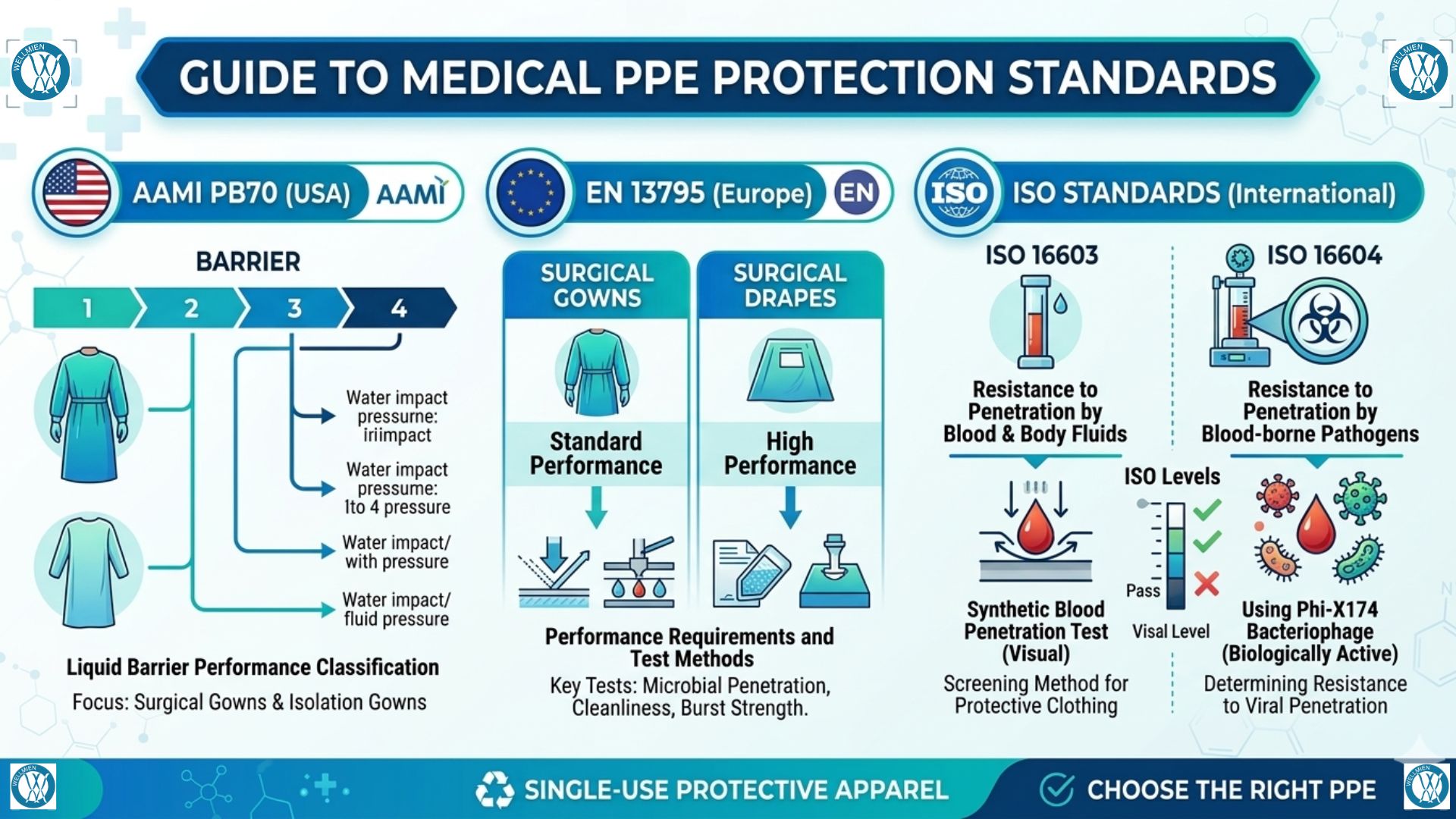
AAMI PB70 Standard
The AAMI PB70 standard is widely used in the United States to classify medical gowns according to their barrier protection performance.
The standard defines four levels of protection.
Level 1
Minimal fluid exposure, suitable for basic patient care.
Level 2
Low fluid exposure is used for procedures such as blood draws.
Level 3
Moderate fluid exposure is commonly used in emergency care.
Level 4
High fluid exposure is required for surgical procedures.
EN 13795 Standard
EN 13795 is a European standard used to evaluate protective clothing in surgical environments.
The standard measures:
-
Microbial barrier performance
-
Material cleanliness
-
Resistance to liquid penetration
Many European hospitals require surgical garments to comply with this standard.
ISO 16603 and ISO 16604
These standards evaluate the ability of protective materials to resist penetration by synthetic blood and viruses.
They are particularly relevant for protective clothing used in infectious disease control and high-risk medical environments.
Disposable vs Reusable Medical Protective Clothing
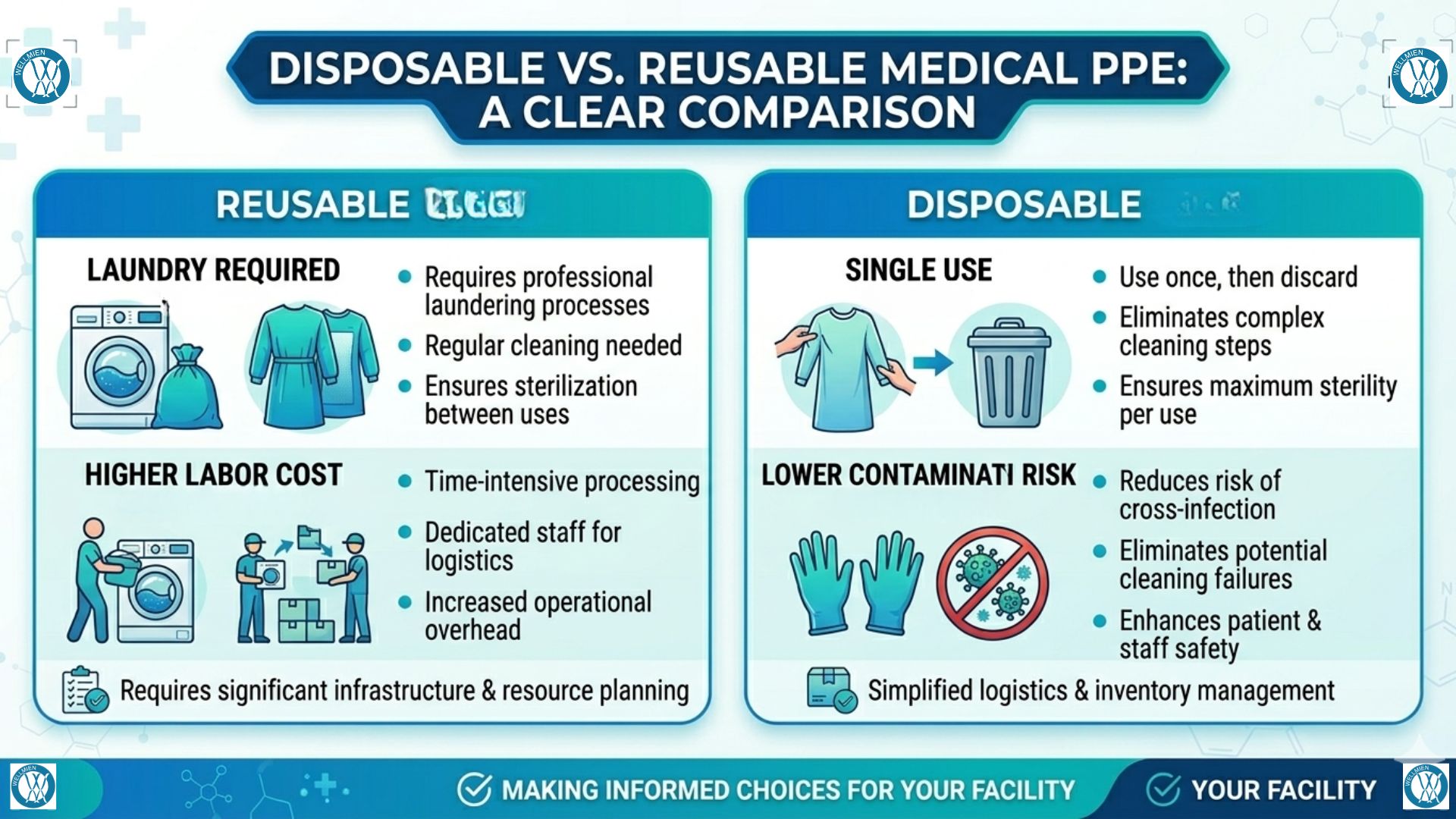
Healthcare organizations often compare disposable and reusable protective garments when developing PPE strategies.
Disposable Protective Clothing
Advantages include:
-
Reduced cross-contamination risk
-
Consistent product quality
-
No laundering requirements
-
Faster workflow in medical facilities
Disposable PPE is commonly used in high-turnover environments such as hospitals and emergency care units.
Reusable Protective Clothing
可重复使用的防护服
Reusable garments may offer lower long-term product costs in certain environments.
However, they require strict laundering and sterilization processes to maintain protective performance.
Improper cleaning can compromise barrier protection.
How Hospitals Choose the Right Protective Clothing
医院如何选择合适的防护服
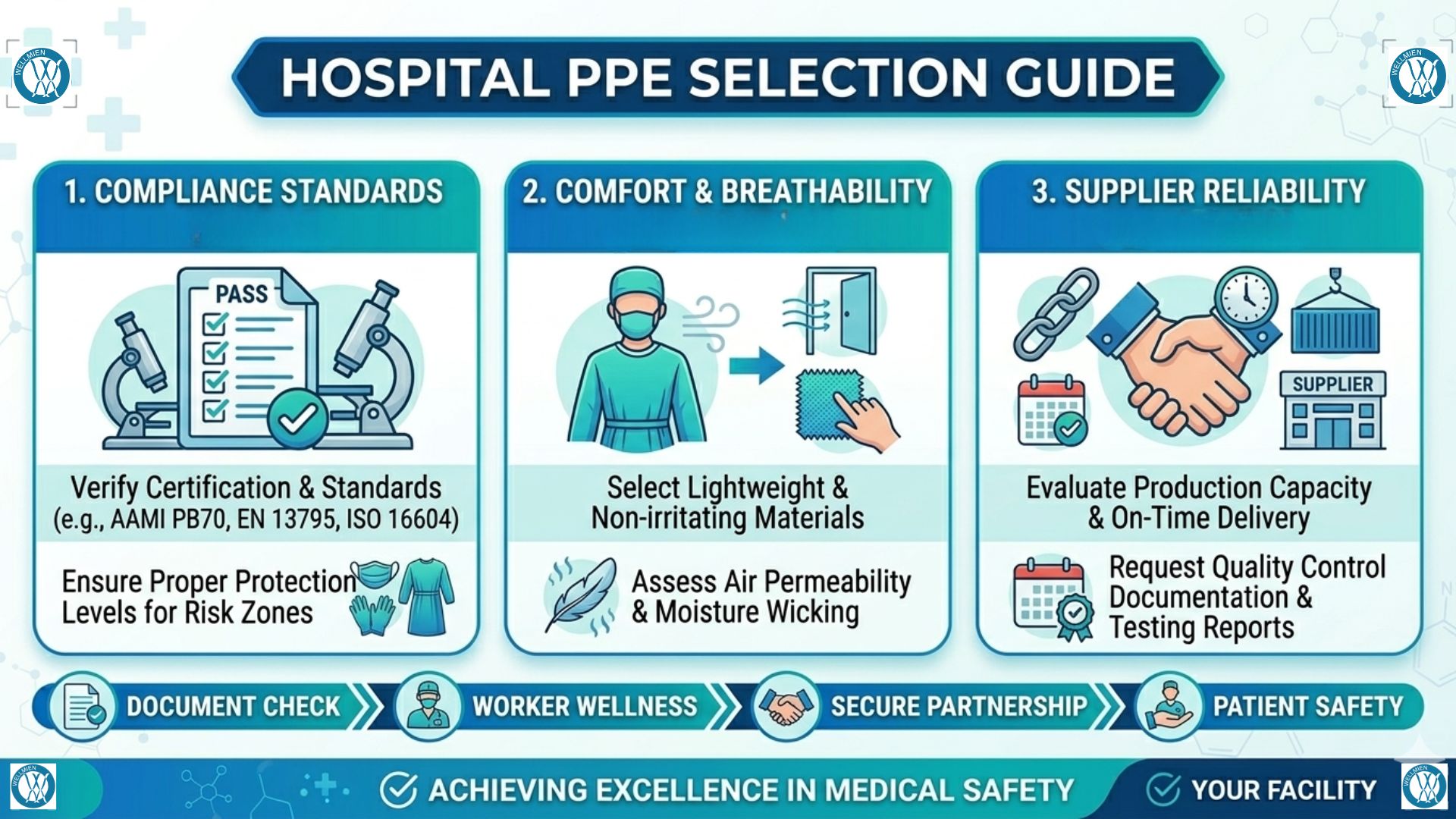
Selecting appropriate PPE requires careful evaluation of clinical needs, safety standards, and operational efficiency.
Evaluate Risk Levels
Different hospital departments require different protection levels.
Examples:
General wards → Isolation gowns
Operating rooms → Surgical gowns
Infectious disease units → Protective coveralls
Consider Material Performance
Important factors include:
-
Fluid resistance
-
Breathability
-
Lightweight design
-
Comfort during long shifts
Comfort can significantly influence worker compliance.
Verify Certifications
Healthcare buyers should confirm that suppliers provide:
-
Product testing reports
-
Regulatory documentation
-
Compliance certifications
Manufacturers with ISO 13485 quality management certification are often preferred.
通常优先考虑拥有 ISO 13485 质量管理认证的制造商。
Assess Supplier Reliability
Healthcare facilities increasingly prioritize suppliers that can provide:
-
Stable production capacity
-
Reliable delivery schedules
-
Consistent product quality
Supply chain stability is a critical factor in healthcare procurement decisions.
Global Demand for Healthcare Protective Clothing
Demand for healthcare protective clothing continues to grow due to several factors.
Key drivers include:
-
Increasing infection control awareness
-
Expanding healthcare infrastructure
-
Rising global healthcare expenditure
-
Preparedness for public health emergencies
Major healthcare PPE markets include:
-
North America
-
Europe
-
Middle East
-
Southeast Asia
Healthcare distributors are increasingly seeking long-term partnerships with reliable medical PPE manufacturers.
FAQ: Healthcare Protective Clothing
What is healthcare protective clothing?
Healthcare protective clothing refers to medical garments designed to protect healthcare workers and patients from exposure to infectious materials, bodily fluids, and hazardous substances.
What is the difference between isolation gowns and surgical gowns?
Isolation gowns are typically used for routine patient care, while surgical gowns provide higher levels of protection and are used during surgical procedures.
Are disposable medical protective garments safe?
Yes. Disposable protective clothing is widely used in healthcare settings because it reduces cross-contamination risks and provides consistent protection levels.
What materials are used in healthcare protective clothing?
Common materials include polypropylene nonwoven fabric, SMS material, polyethylene coatings, and microporous films.